
RWU-GSI Bruce J. Barber Memorial Internship Summer 2025 Highlights
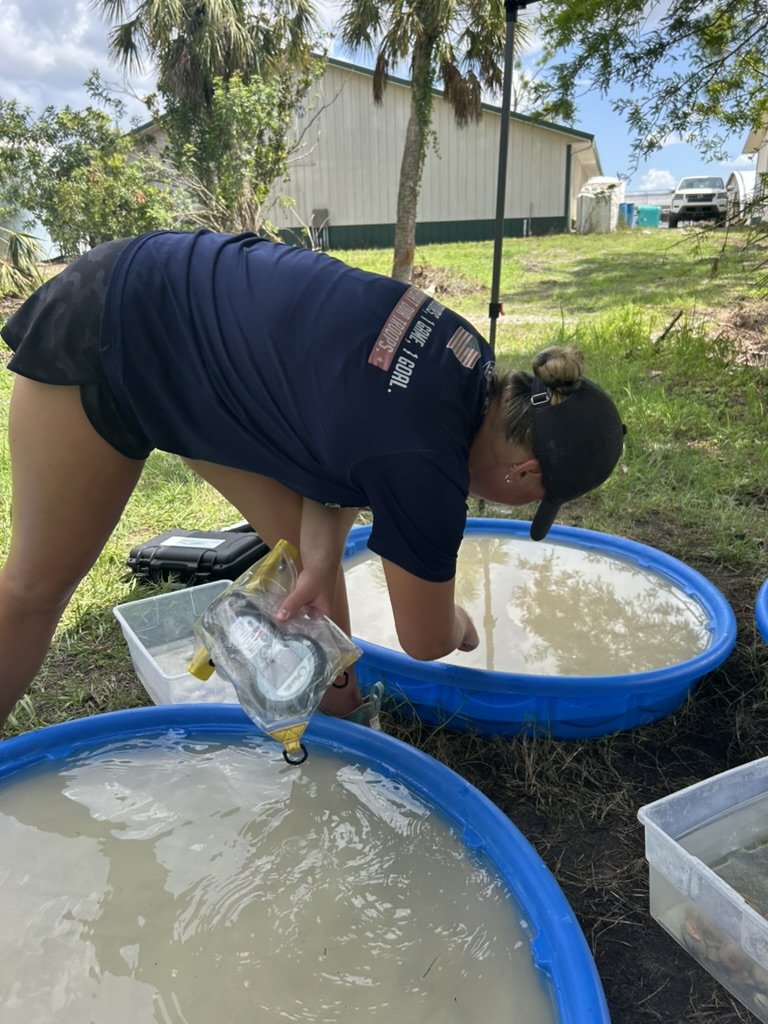
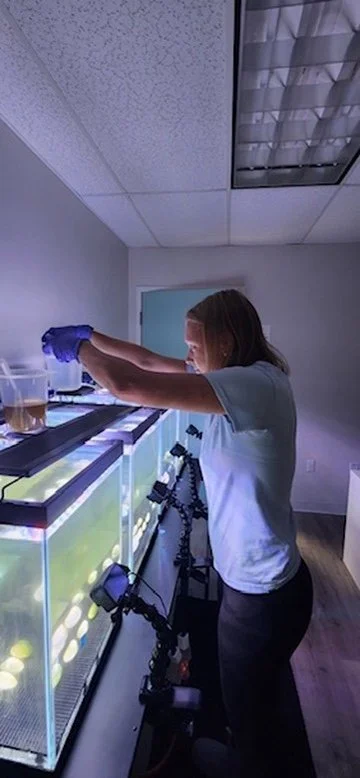
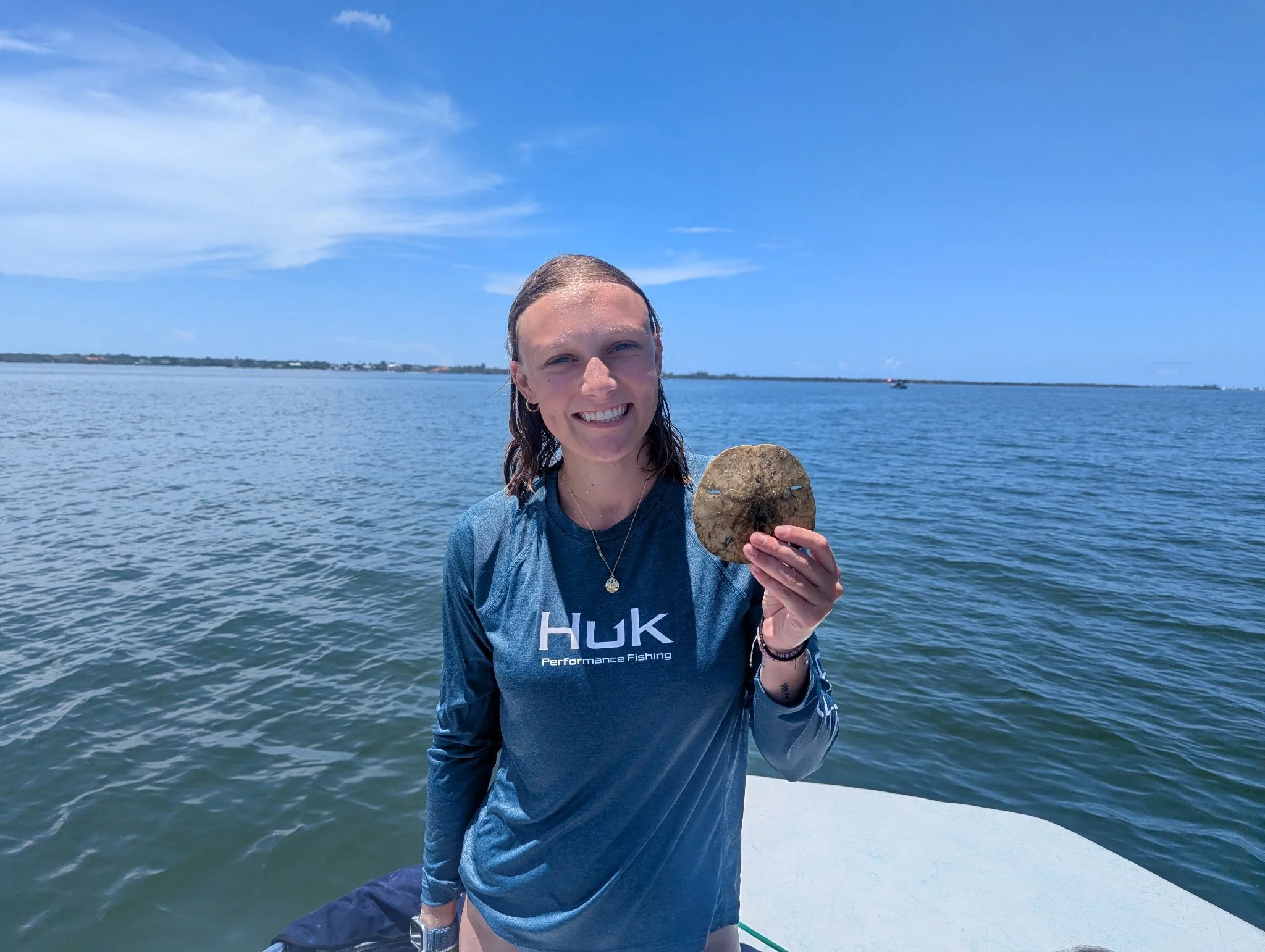
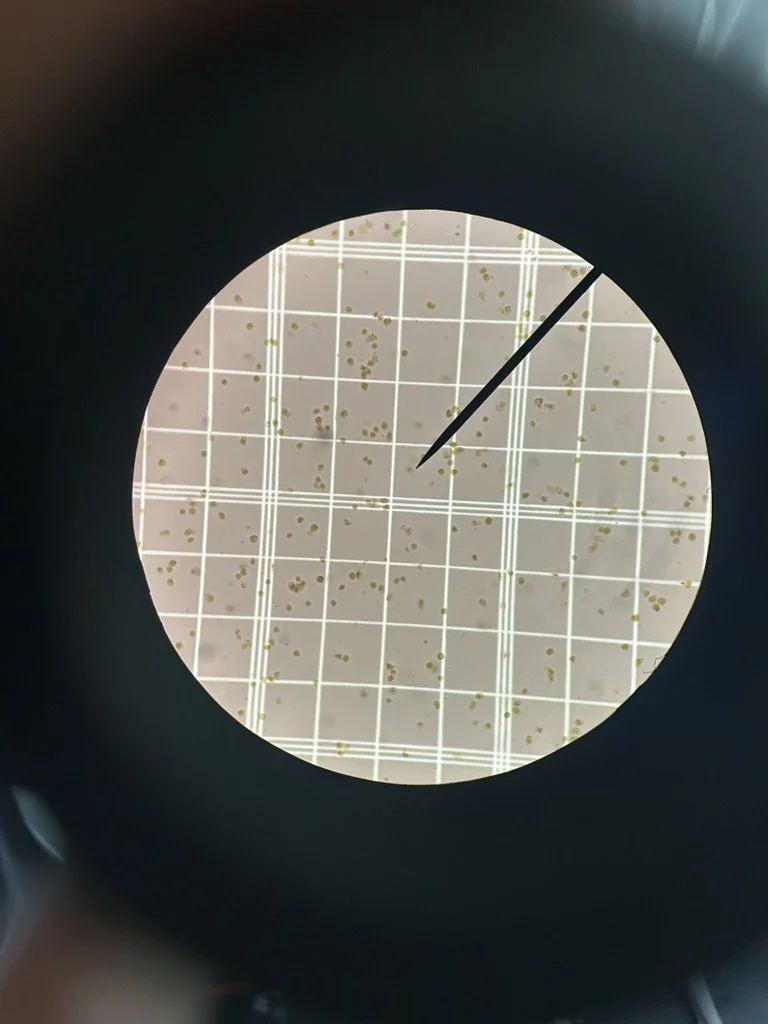
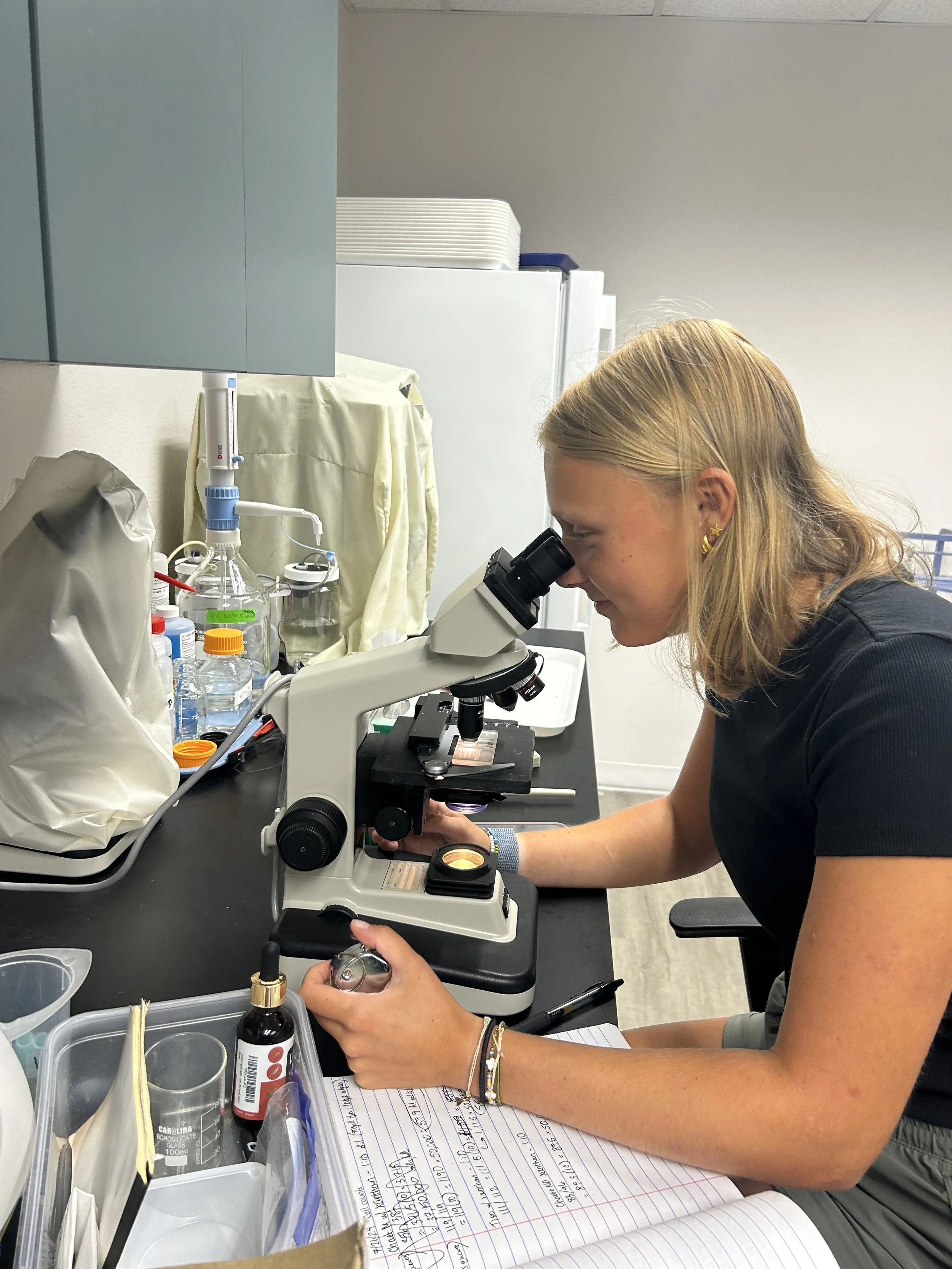
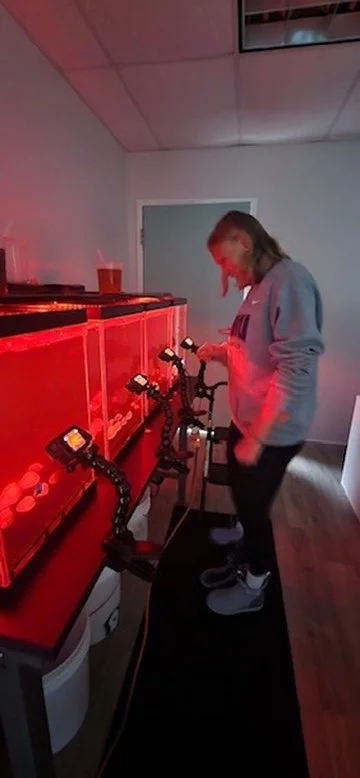
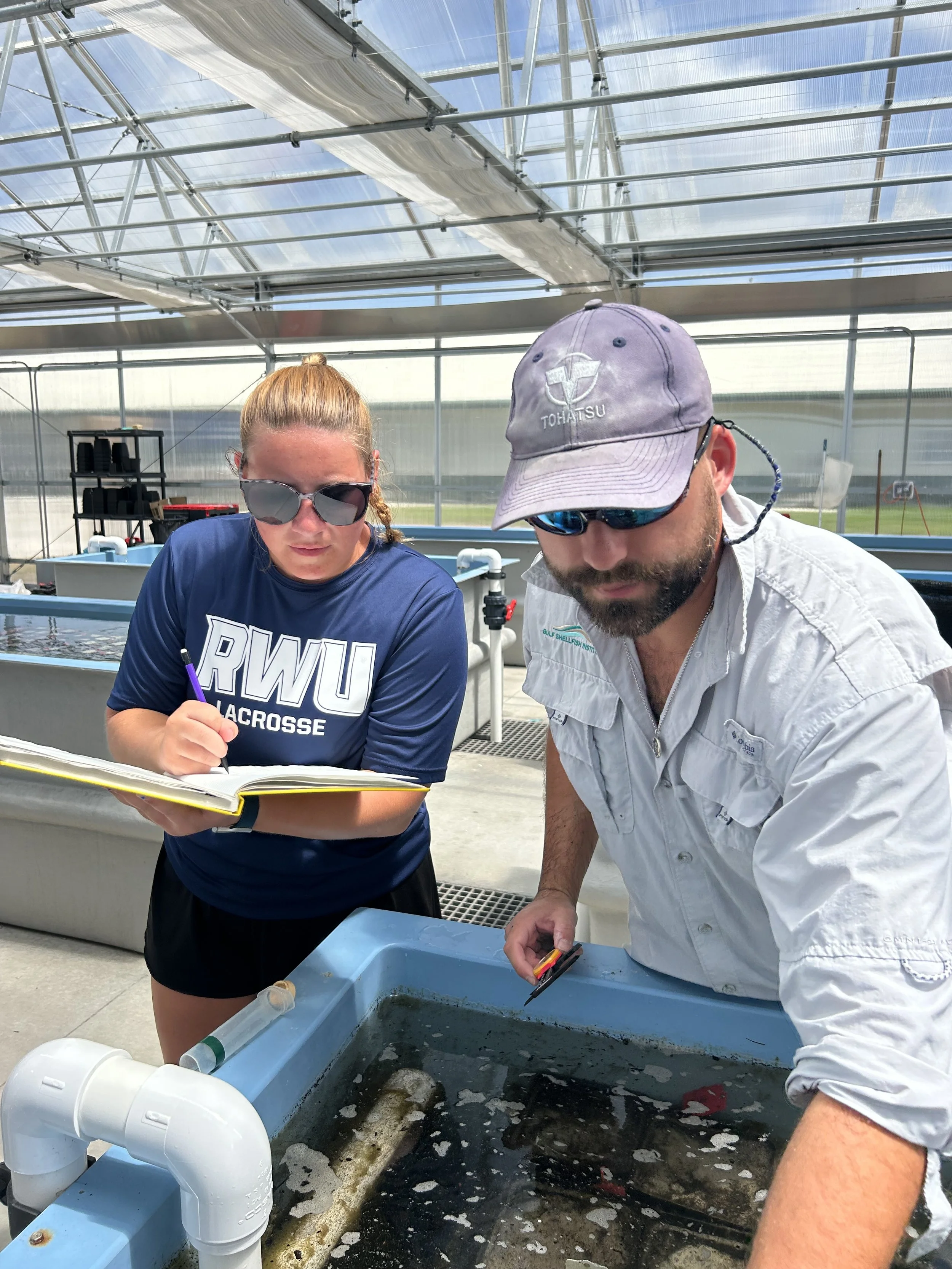
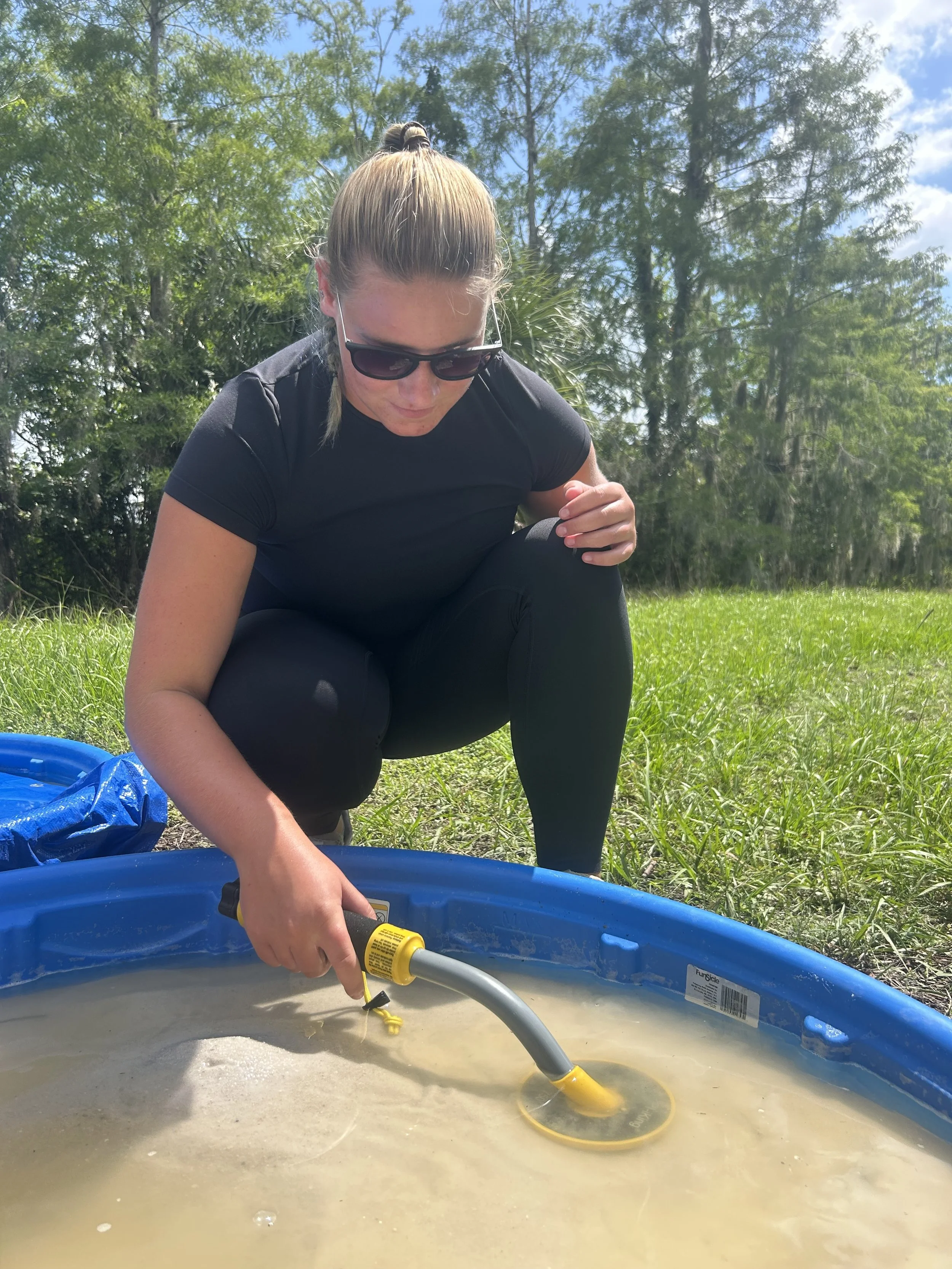
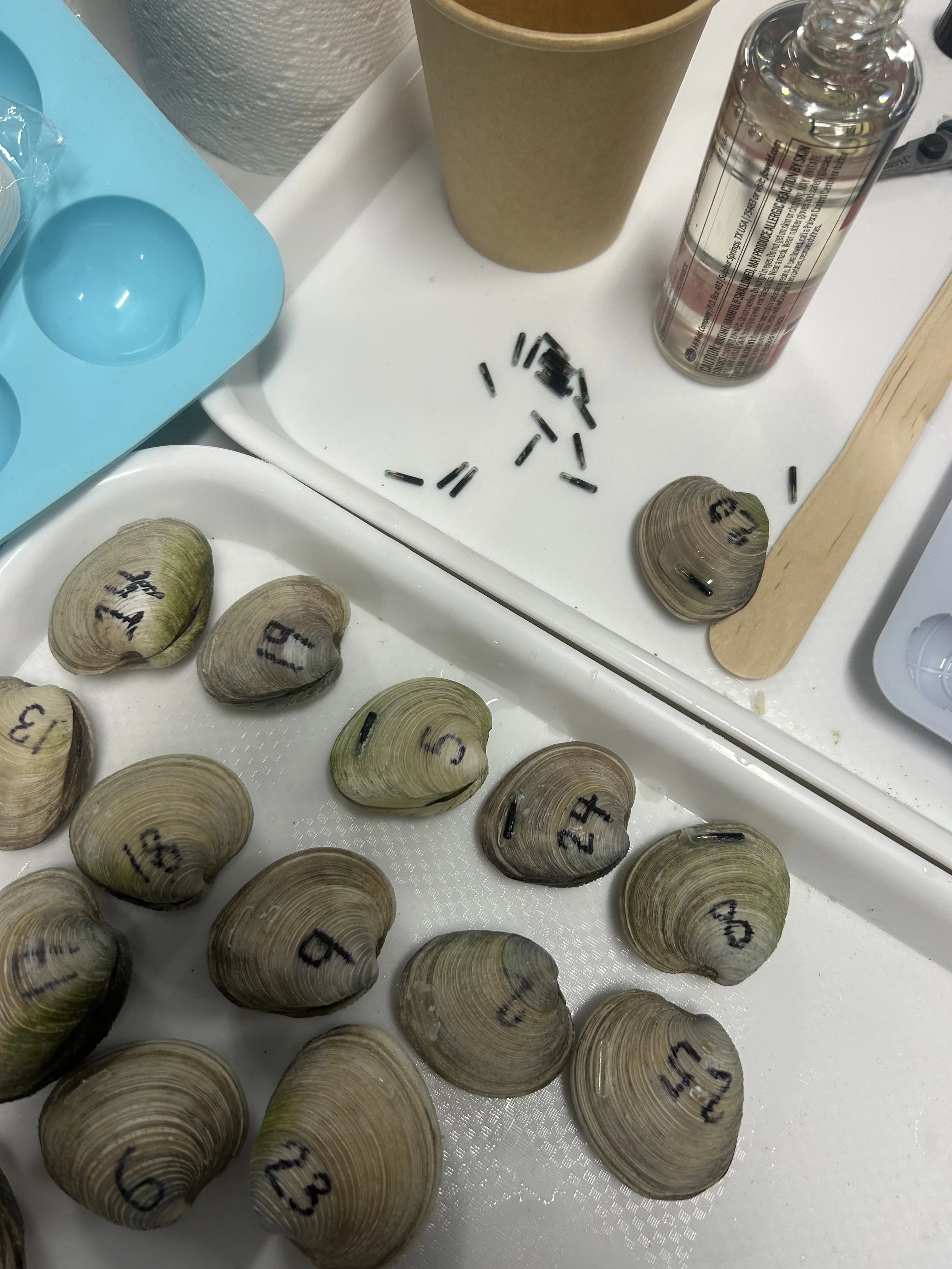
This past summer, GSI hosted Kiley Ruffhead (RWU ‘25) and Meghan Purcell (RWU ‘25) for the Bruce J. Barber Memorial Internship, in partnership with Roger Williams University (RWU). Over the course of two months, both interns conducted independent research projects designed to provide them with hands-on experience in the field and laboratory while contributing to GSI’s mission of using applied research to advance shellfish aquaculture and healthy ecosystems.
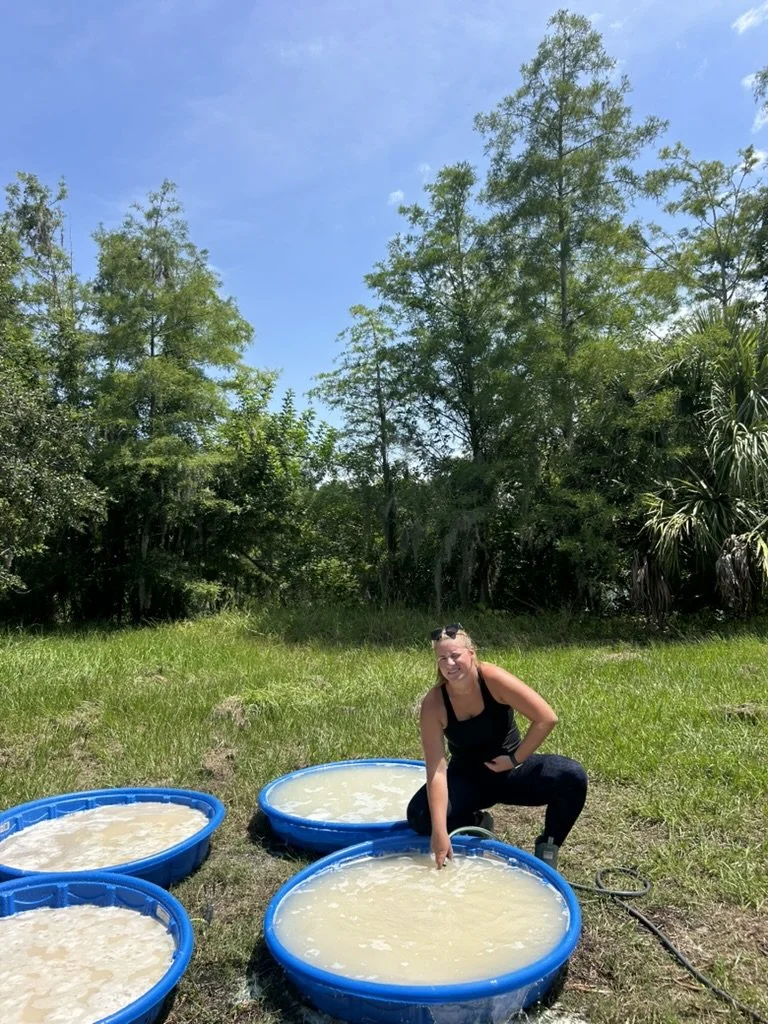
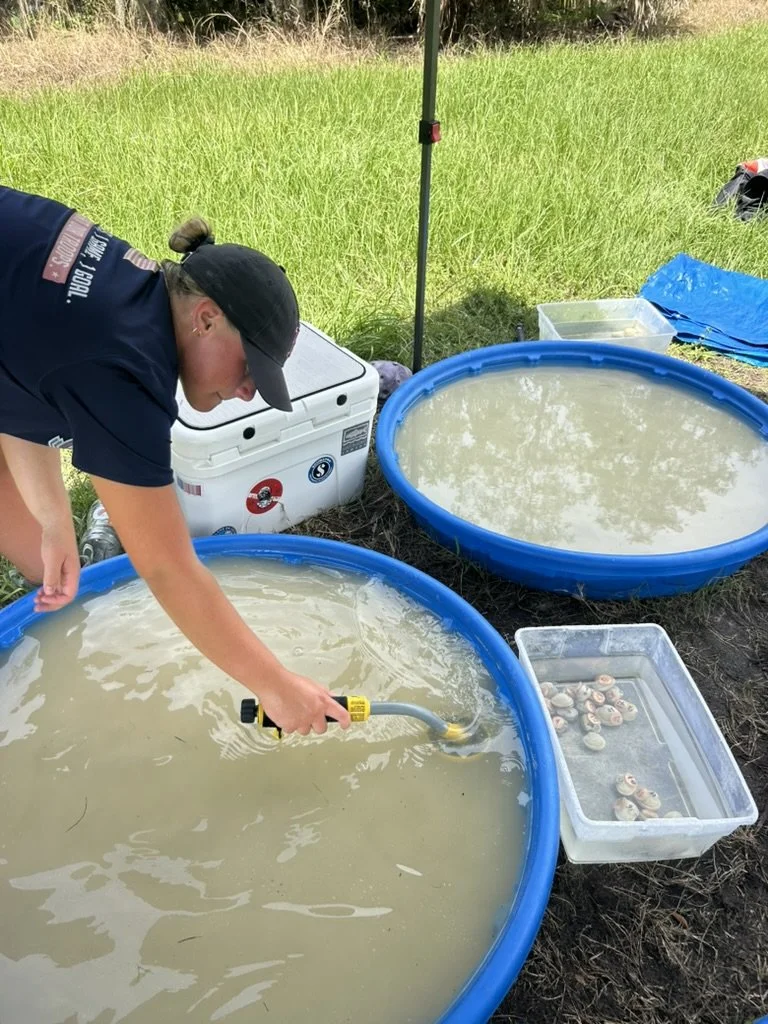
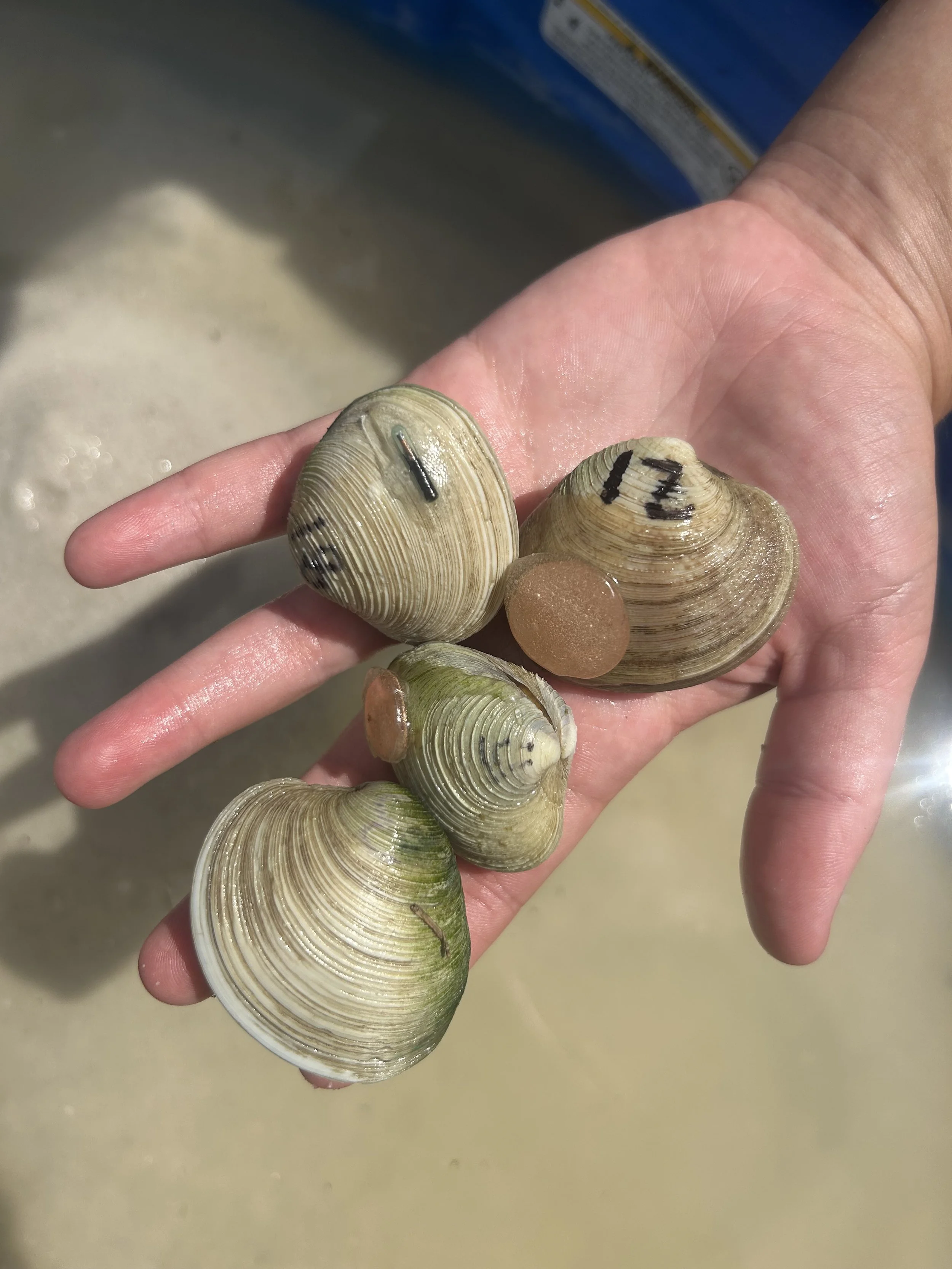
Kiley's project focused on comparing minimally invasive mark-recapture techniques for the Southern Hard Clam (Mercenaria campechiensis). In Kiley's primary experiment she compared the effectiveness of detecting hard clams marked with PIT tags versus those marked with copper rounds using a metal detector.
“Tracking and monitoring the long-term survival of clams during restoration is difficult … few studies have thoroughly developed or optimized ways to mark and track individual clams for recapture.”
Kiley ran a laboratory experiment setup with mesocosms filled with sand, where she buried clams and GSI staff attempted to locate the tagged clams. Clam depth and time to detection was recorded for each clam. Kiley found that PIT tags were recovered 100% of the time, while the thicker and thinner copper rounds were only found 83% and 86% of the time, respectively (Figure 1).
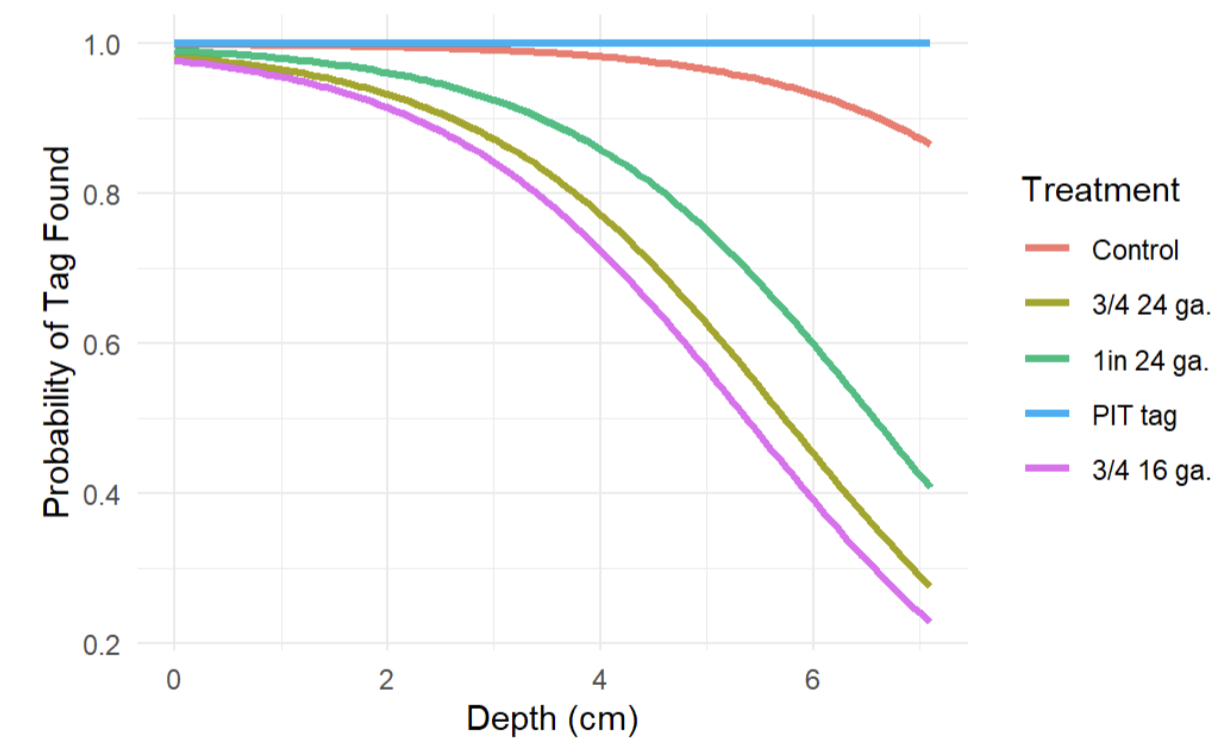
Figure 1. Predicted probability of tag recovery across burial depth (cm) for each treatment. Solid lines represent predicted probabilities.
GSI is using the information Kiley found to investigate effectiveness of PIT tags in field conditions so this method can be evaluated to use for long term monitoring of clams in the “All Clams On Deck” Initiative.
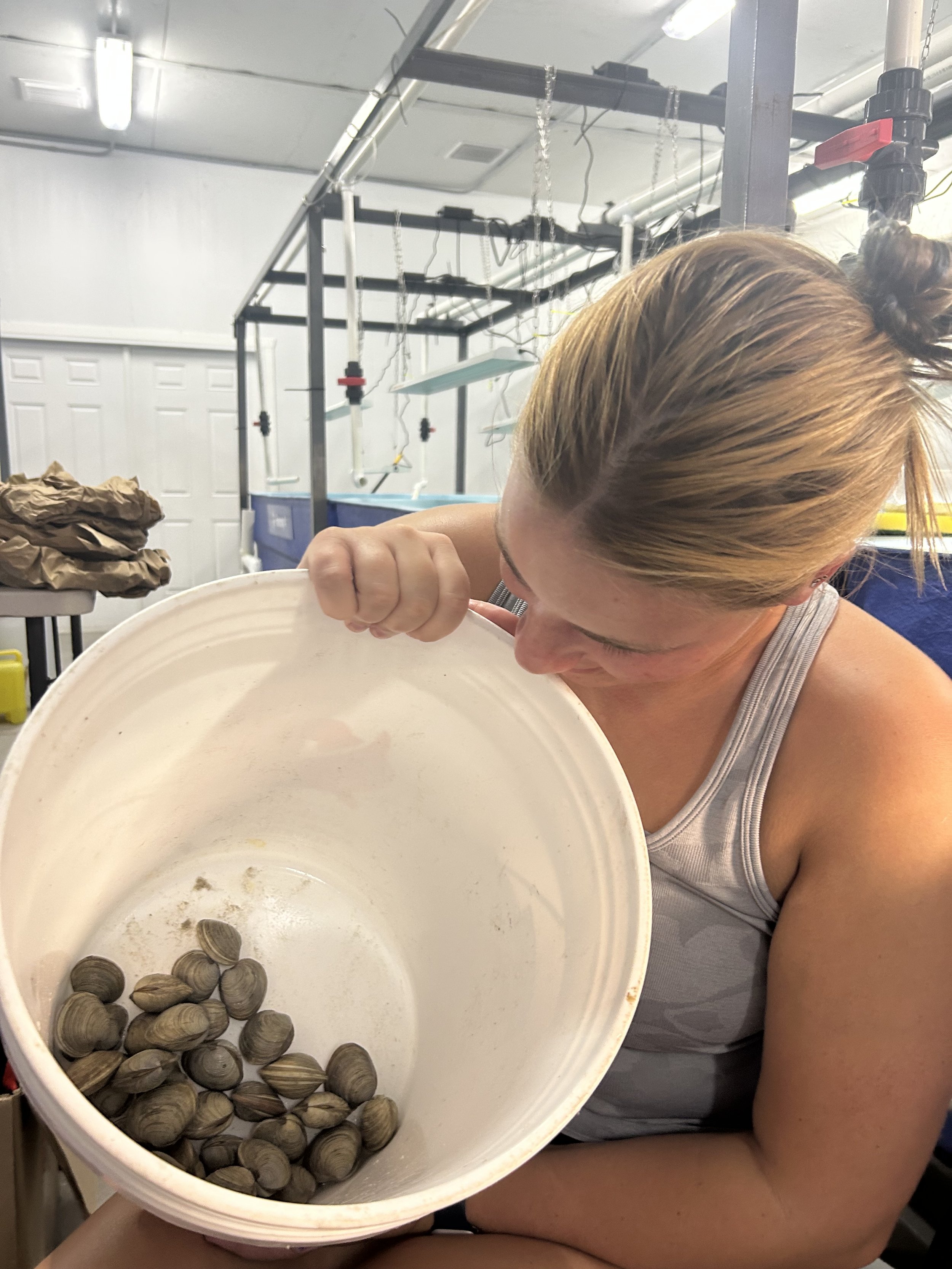
While Kiley focused on supporting GSI’s field research, Meghan took an aquaculture perspective with her project, aiming to quantify hard clam feeding behaviors. There is limited published information on hard clams’ feeding behaviors, or recommended feeding protocols, in low-stress environments, including shellfish hatchery settings.
“The lack of published protocols for feeding hard clams for aquaculture, making it difficult to determine how often these adult hard clams actually need to be fed to optimize growth.”
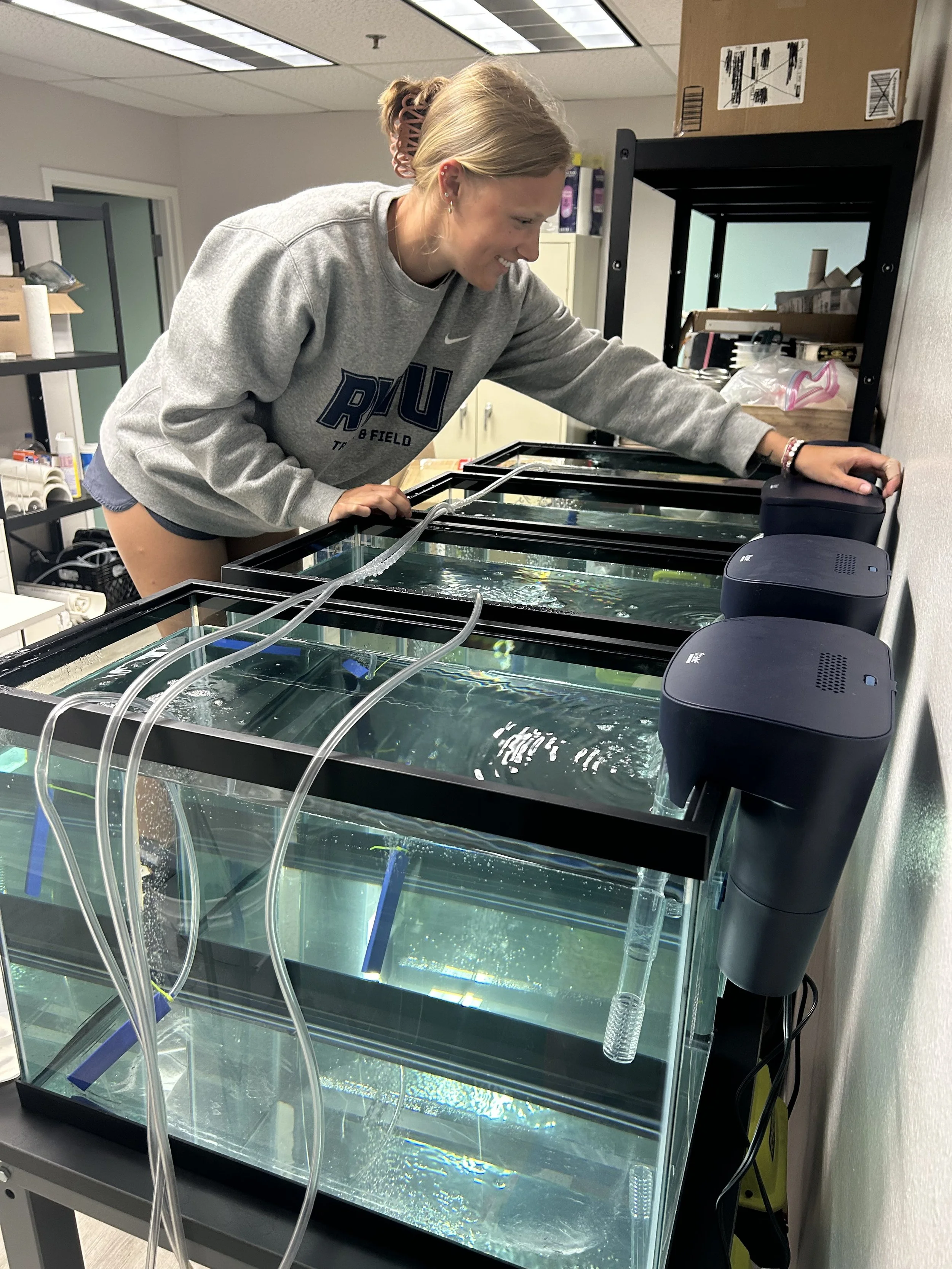
Meghan’s study aimed to provide insight on how feeding behavior, estimated by siphon presence, of M. campechinesis change under different conditions typically used by shellfish hatcheries. The impacts of diet, feeding frequency, and light period on binomial siphon response (presence versus absence) were analyzed to find preferential conditions for feeding M. campechiensis in aquarium settings.
Aquariums were exposed to one of four feeding treatments: continuous or bi-daily commercial non-living algae concentrate, or continuous or bi-daily RWU algal concentrate. Aquariums were filmed to track clam siphon activity. Water samples were taken every two hours for a total of 8 hours to track chlorophyll-a concentration as a proxy for food availability in the aquariums (phytoplankton abundance).
Siphon presence, which suggests clams are feeding, was greatest when RWU algae concentrate was fed as opposed to the commercial non-living algae concentrate, regardless of feeding frequency (Figure 2). Meghan suggested “if hatcheries are to feed [non-living] shellfish diet, siphon presence will be greater when feeding continuously.” Meghan also observed overall low siphon presence in experimental hard clams (~15-20%) but generally higher siphon presence in the light versus dark photoperiod.
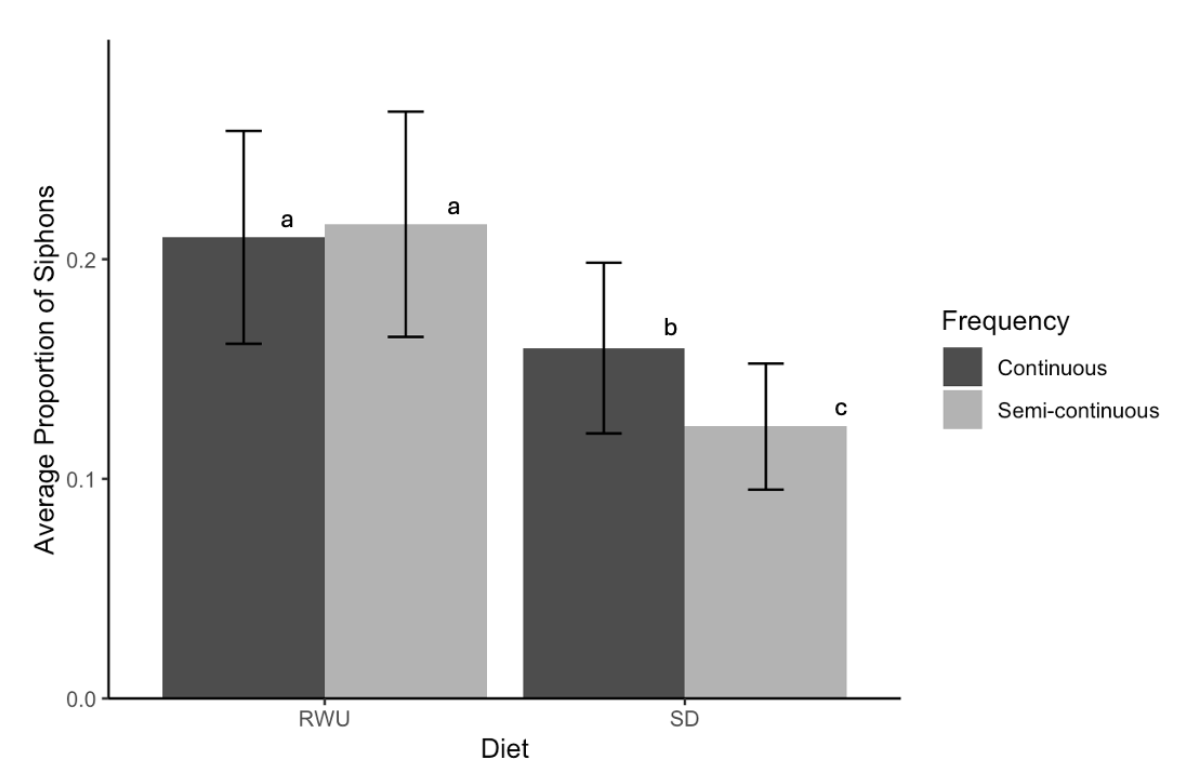
Figure 2. Average proportion of siphons present as a function of the interaction between diet and feeding frequency, where the error bars represent standard error (N=8). “RWU” represents the live microalgae concentrate from Roger Williams University and “SD” is the non-living Reed Mariculture Shellfish Diet.
Results from this study will help GSI further quantify feeding behaviors and rates of hard clams in both aquaculture settings and a more natural, “wild” setting and provide a step towards assessing the water filtration capabilities of hard clams.
GSI is excited to have offered an applied internship in shellfish aquaculture research for the past two years. Our interns have conduced valuable research, generating preliminary data that helps guide GSI’s future projects. We look forward to continuing our collaboration with RWU to support students’ interests through hands-on experiences in shellfish aquaculture, research, and restoration.