
GSI continues selective breeding of heat-tolerant hard clams
Gulf Shellfish Institute staff assess thermal tolerances of selectively-bred northern hard clams raised at two distinct locations – Cedar Key and Tampa Bay, FL.
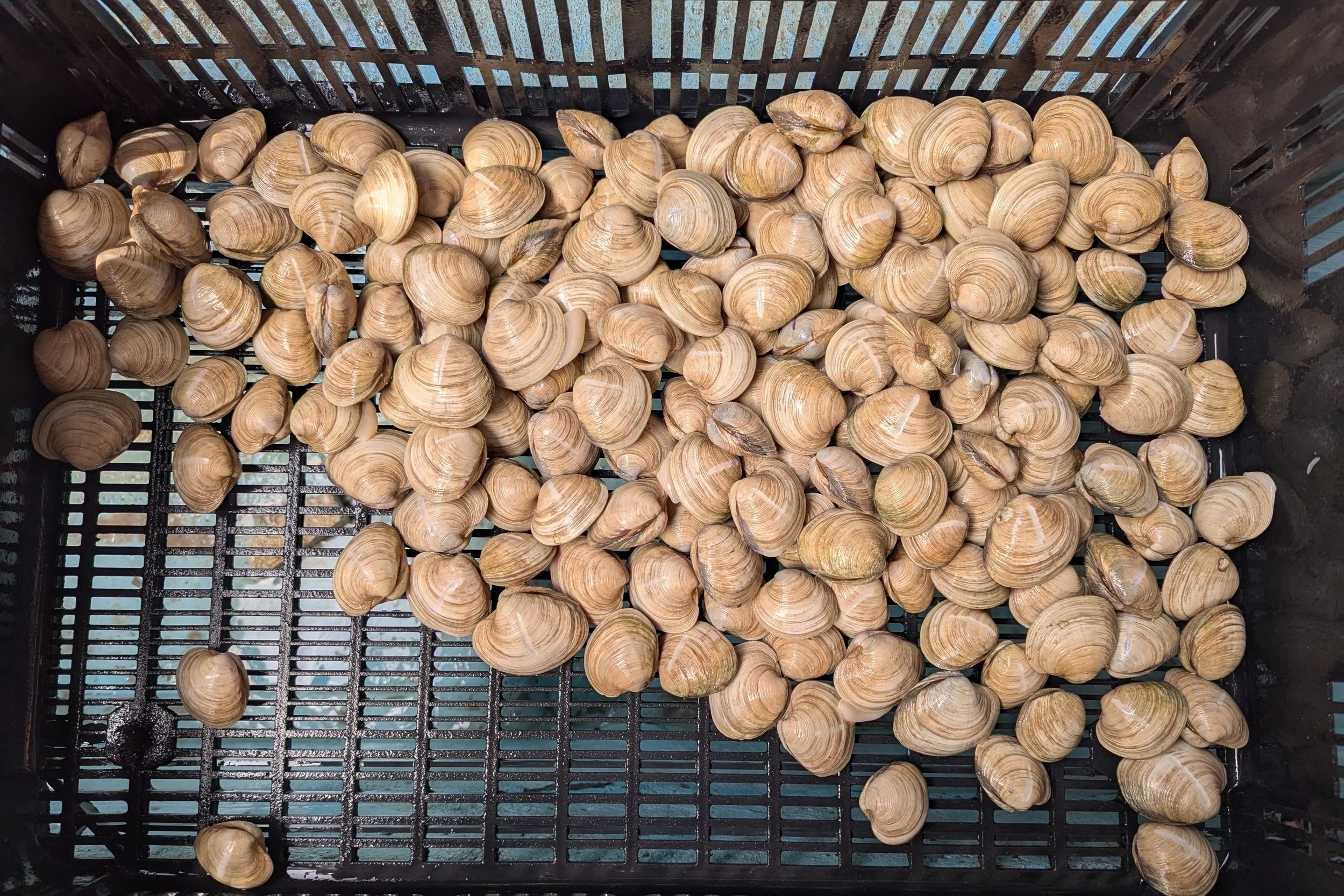
In a previous GSI experiment highlighted in the news article It’s Getting Hot in Here, northern hard clams (Mercenaria mercenaria) were exposed to a simulated marine heatwave, and survivors of 37°C maxima were selected as broodstock for a heat-tolerant line of clams. First generation (F1) offspring were reared on two shellfish leases in Cedar Key and Tampa Bay, FL. The goal of this multi-year project is to increase the resilience of northern hard clams to marine heatwaves, which is thought to be a primary cause of mass mortality events for growers on Florida’s Gulf Coast.
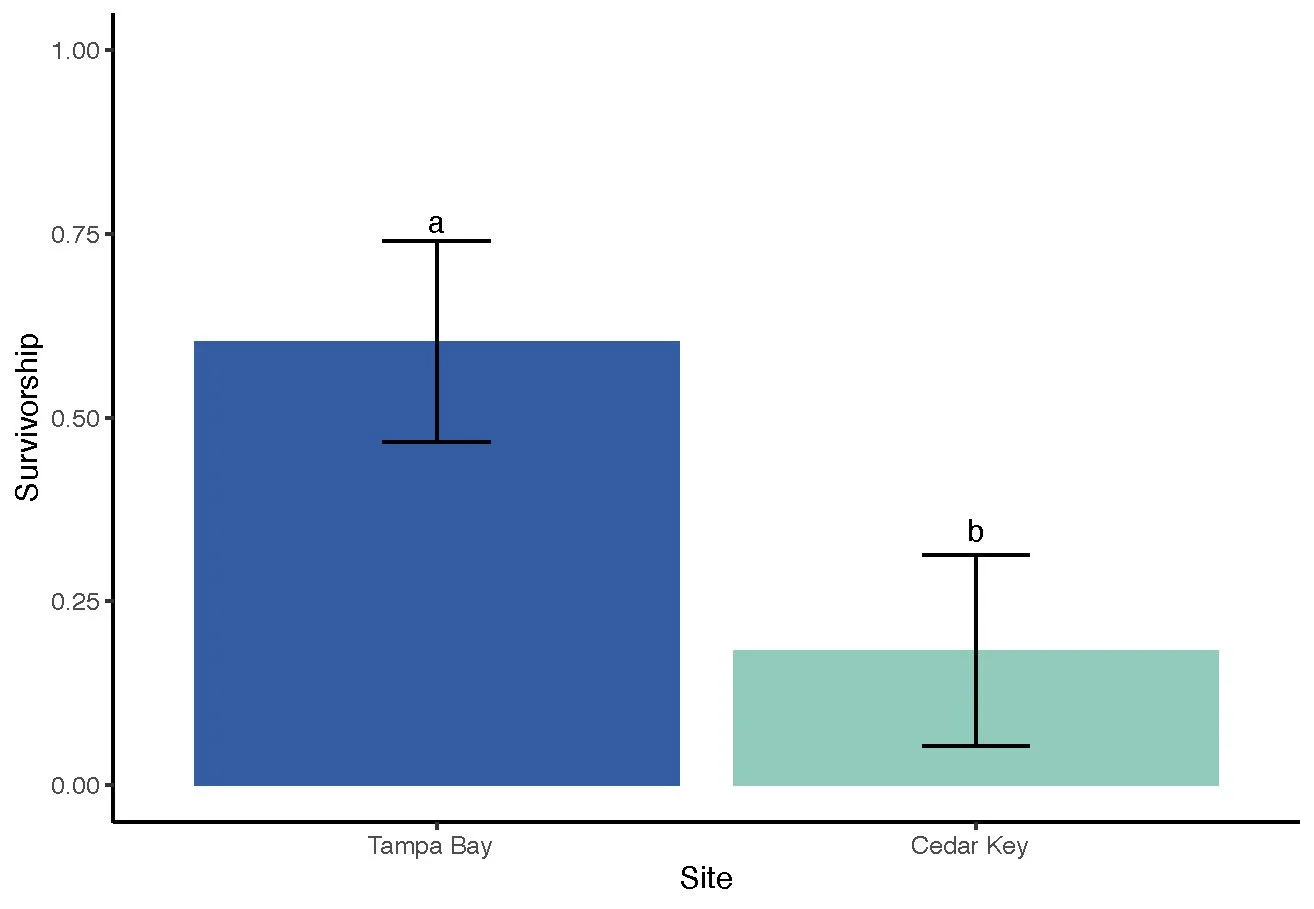
Figure 1. Mean (±SE) final survivorship of F1 heat-selected M. mercenaria by grow-out location. Siblings were collected from both locations (Tampa Bay, blue; Cedar Key, green) and subjected to a 7 day simulated marine heatwave.
In the fall of 2025, our first generation of selectively bred hard clams reached market size and were ready to become broodstock for a second generation. Siblings raised in both Cedar Key and Tampa Bay were subjected to a week-long simulated marine heatwave, with temperatures reaching a maximum of 37°C (99°F). Relative to the parental generation of northern hard clams, survival increased in just one generation of selective breeding. Using the same experimental design, mean broodstock survival on Day 7 was only 11% and time to 50% mortality (LT50) was ~5 days. In contrast, F1 siblings from heat-tolerant parents experienced an average survival of 39% and an LT50 of over one day longer (~6-7 days) (Figure 1). This means that the selected line should survive 1-2 days longer at extreme temperatures than conventional commercial stocks.
The next step for GSI is to create second-generation heat-selected M. mercenaria using survivors of the second simulated heatwave conducted in Fall 2025. Resulting offspring will then be split again and raised over 100 miles apart in both Cedar Key and Tampa Bay, FL on commercial leases, alongside conventional commercial stock. Assessments will be made on potential variations in generational and site-specific growth and survival. This project shows promise for developing a population of hard clams with improved resilience to extreme summer temperatures.